




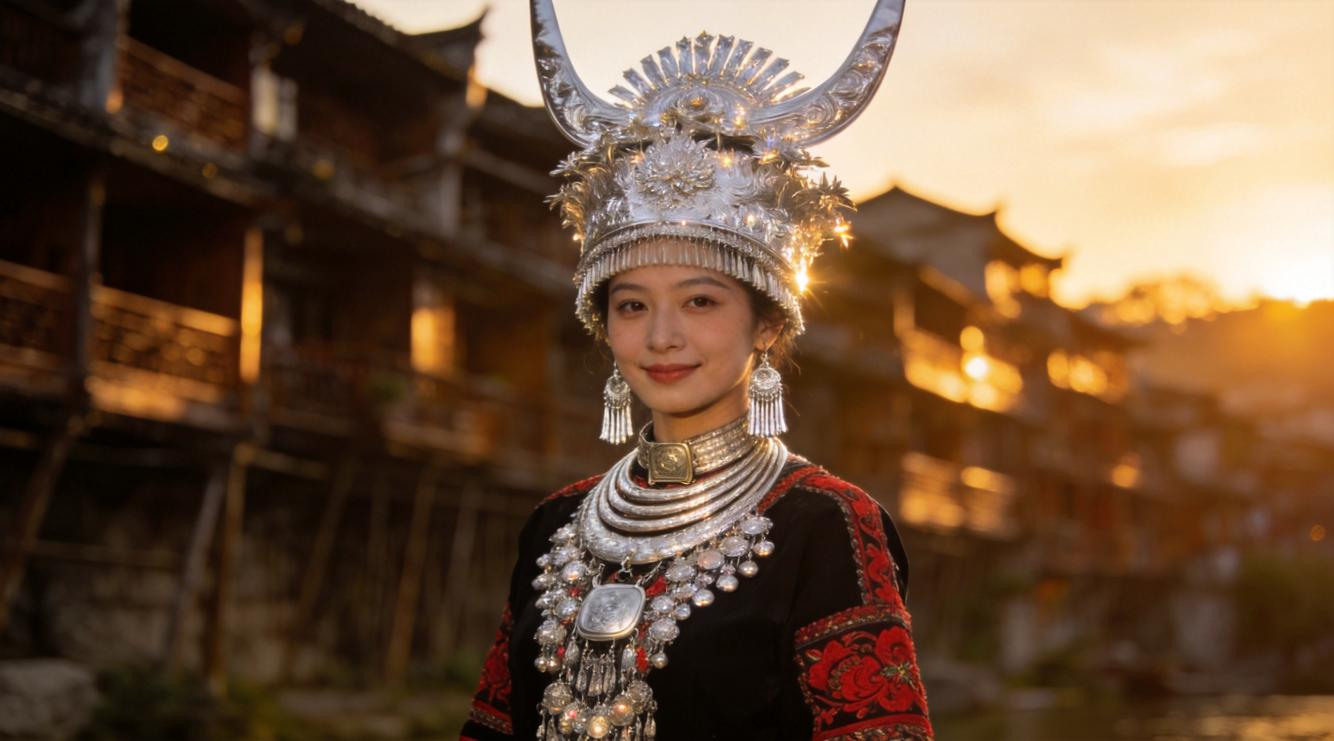
Few travelers know the incredible story behind Guizhou’s most stunning hidden treasure — how a single winding river built a centuries‑old silver legacy across the mountains.
For over 400 years, silver has defined the soul of Qiandongnan. It traveled upstream alongside timber shipments on the Qingshui River, was shaped into breathtaking ceremonial attire for the Miao people, and evolved into one of China’s most precious living cultural heritages.
Miao silver handicrafts can be found across many parts of Guizhou. Yet the most lavishly detailed, solidly crafted, and artistically refined silver pieces all stem from one ultimate destination: Qiandongnan Miao and Dong Autonomous Prefecture.
What makes this mountainous region uniquely exceptional?
In this story, we trace the full, untold journey of Qiandongnan’s iconic silver heritage — from the ancient trade waterways of Qingshui River and centuries‑worn stone streets, to the glowing hearths of local silversmiths, and finally to the graceful Miao women who carry generations of history in their handcrafted silver costumes.

I. Qingshui River — The Mountain Waterway That Brought Silver Wealth
To truly grasp Qiandongnan’s world‑famous silver craftsmanship, you first need to understand its lifeblood — the Qingshui River.
Flowing from southern Guizhou through the heart of Qiandongnan and connecting to the Yangtze River basin, the Qingshui is not China’s most famous waterway. But it holds irreplaceable historical value. It was the only natural trade route linking Guizhou’s remote ancient forests to major commercial hubs across central China.
Long before the Ming Dynasty, dense primeval forests flourished undisturbed across the Guizhou plateau. When imperial troops first ventured into Qiandongnan in 1397, they were amazed by the towering, lush woodland. At that time, central China still boasted abundant timber resources, so these mountain forests remained untouched by large‑scale commercial logging.
Everything changed in 1514.
To restore imperial palaces in Beijing, the Ming court sent envoys to source rare, large‑scale high‑quality timber from Jinping County along the Qingshui River. Overnight, the region’s premium fir timber became a coveted royal commodity.
Two forces sparked this 400‑year timber and silver trade. By the mid‑Ming Dynasty, centuries of logging had depleted most old‑growth forests in central China. Meanwhile, the Qingshui River solved Guizhou’s biggest geographical dilemma: transportation. Giant logs harvested from remote valleys could float downstream through interconnected waterways, reaching China’s core economic regions with ease.
Without this river, Guizhou’s finest timber would have been trapped in the mountains, with no way to reach the market — and the silver would never have come in.
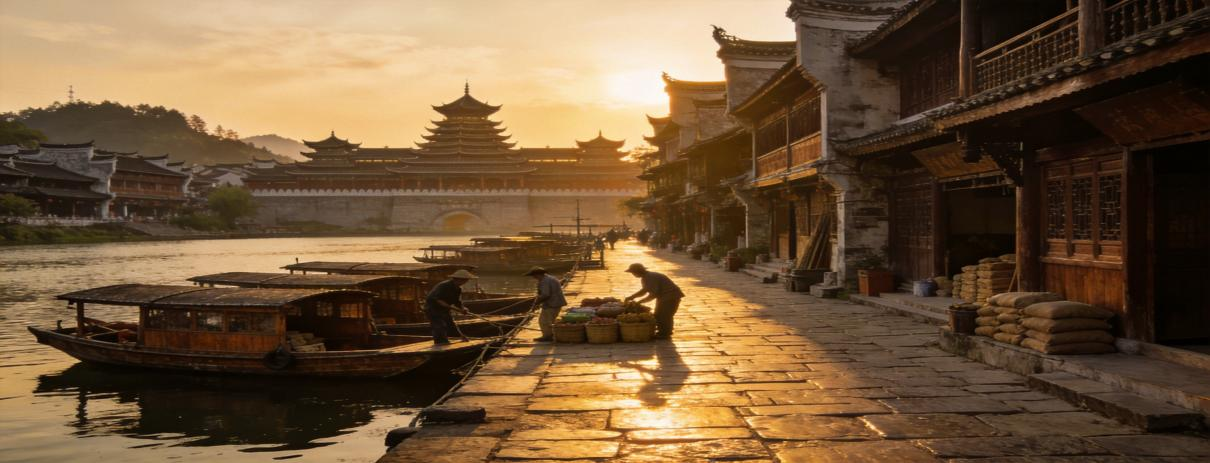
II. Xiasi Ancient Wharf — Where Timber Exited, Silver Entered
Today’s Xiasi Ancient Town, in Kaili, was once the busiest timber transit port on the upper Qingshui River. Wander its streets, and you’ll still find well‑preserved ancient docks and century‑old merchant guild buildings. The bluestone pavements, polished glossy by hundreds of years of porters’ footsteps and rolling timber logs, serve as a vivid, tangible reminder of the town’s prosperous trading era.
The ancient trade followed a simple yet transformative rhythm:
Timber flowed out of the mountains.
Silver wealth flowed in.
During the Qing Dynasty’s Qianlong reign, Jinping County alone generated hundreds of thousands of silver taels in annual timber revenue. Vast amounts of this silver gradually spread to every Miao village along the Qingshui River basin, nurturing the birth of local silver craftsmanship.
This is the secret behind Qiandongnan’s unrivaled silver heritage. Its superiority is not just a triumph of aesthetics — it is a product of unique economic and geographical advantage. No other Miao settlement across China had access to such a stable, abundant supply of pure silver, all made possible by the Qingshui River’s ancient trade corridor.
Silver came to the mountains by river. And once it arrived, it never left — it was hammered, twisted, and woven into the very fabric of Miao identity.
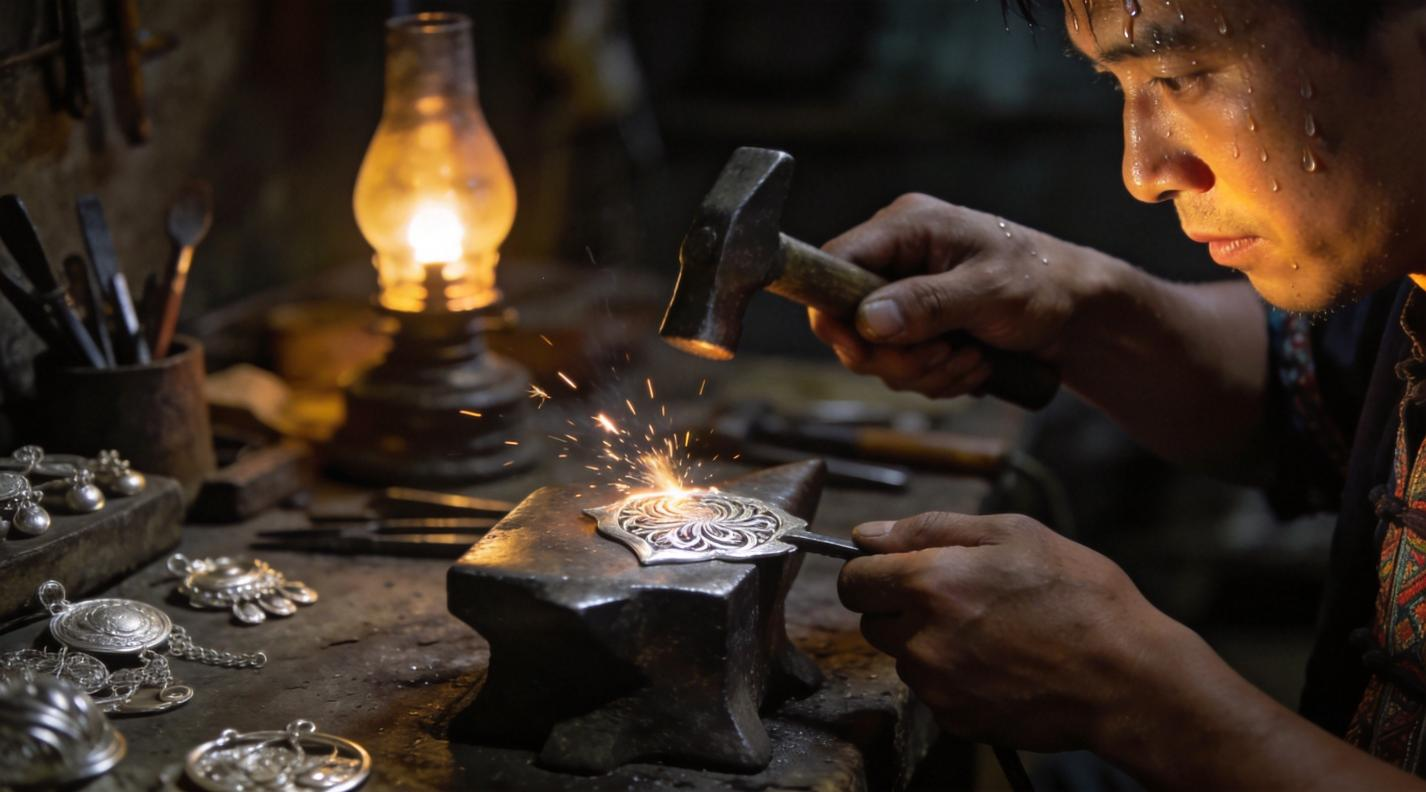
III. Kongbai Silversmiths — Heirloom Art Over Mass Production
Plentiful silver raw materials were only the foundation. It was local artisans who turned plain silver ingots into the intricate, wearable cultural artworks that now captivate the world.
The heart of this craft lies in Kongbai Village, a quiet, little‑known hamlet just a few kilometers from the popular Xijiang Miao Village. Overlooked by most casual tourists, this humble village has been the cradle of authentic Miao silversmithing for centuries.
At its peak in the Qing Dynasty, itinerant silversmiths from Kongbai traveled across five provinces — Guizhou, Hunan, Yunnan, Guangxi and Sichuan — to practice their trade. For generations, they upheld a balanced rhythm: farming the land in busy growing seasons, and traveling to forge silverware in the idle winter months. Local elders still preserve vivid memories of their ancestors’ journeys — recounting which provinces their forebears worked in, how long they stayed, and how their craftsmanship built lasting family prosperity.
In Qiandongnan’s Miao culture, silver is far more than decorative jewelry. It is generational wealth, family honor, and a tangible link to ancestral roots.
A Miao bride’s full ceremonial silver ensemble is decades in the making. Mothers begin collecting and crafting silver pieces when their daughters are young, while grandmothers add precious heirloom ornaments passed down through generations. By the time a girl marries, she is adorned with a complete, stunning set: towering silver horn headdresses, carved silver crowns, layered neck rings, symbolic silver locks, and intricately woven silver belts.
Kongbai silversmiths never chase fast fashion or mass‑produced goods. Every piece is handcrafted to withstand generations, made to be cherished and inherited. This relentless pursuit of perfection — and rejection of commercialized shortcuts — makes Qiandongnan’s silver art truly irreplicable.
Other regions can create beautiful silver jewelry, but none can replicate this heartfelt, heritage‑first craftsmanship forged for family and legacy.
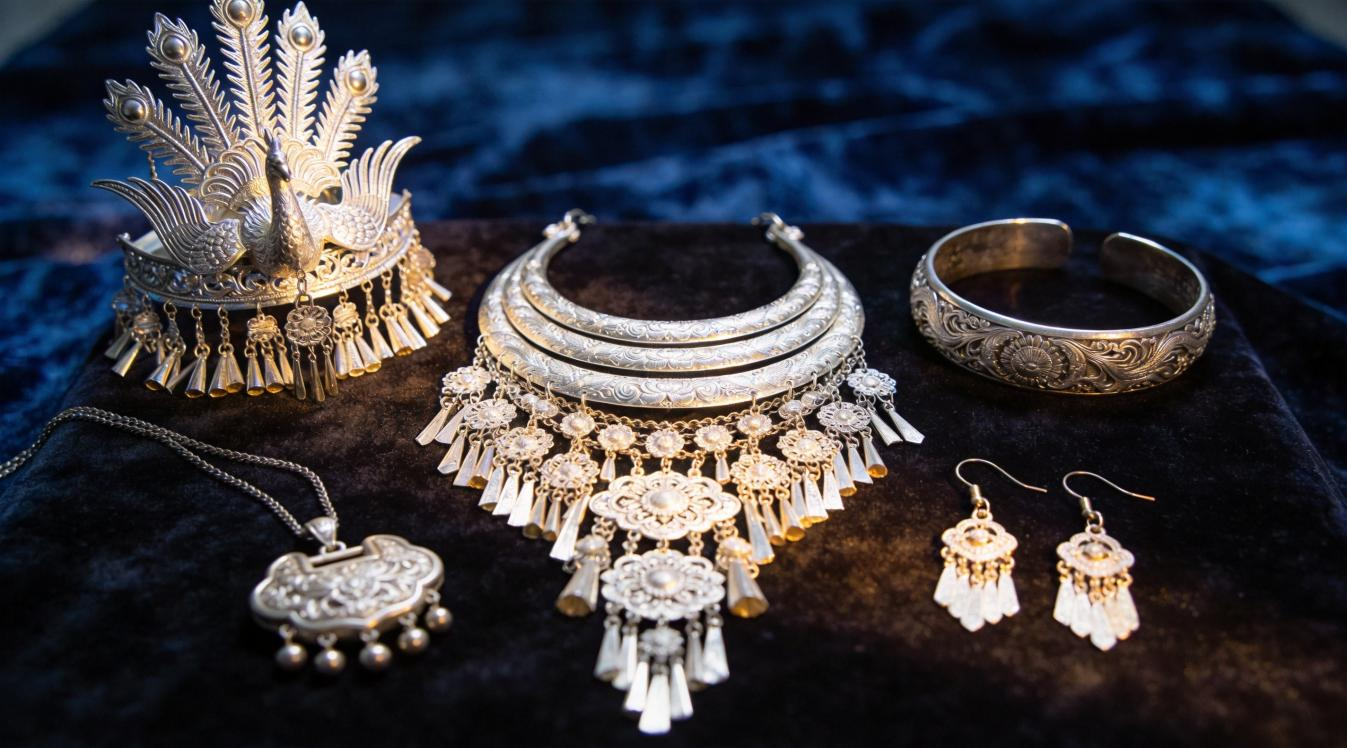
IV. Shidong Festival Attire — Centuries of Heritage Worn Proudly
A raw silver ingot traded along the river, hand‑carved for months by a master silversmith, carefully stored in a family’s wooden chest for over a decade — what does this centuries‑old heritage look like when brought to life?
The answer unfolds every spring in Shidong Town, Taijiang County, another ancient settlement nestled on the banks of the Qingshui River.
During the annual Miao Sister Festival — around the 15th day of the third lunar month — Shidong transforms into China’s most spectacular open‑air showcase of authentic Miao silver culture.
Shidong’s ceremonial silver costumes are renowned worldwide for three unmatched qualities: premium pure silver materials, extraordinarily intricate handcraftsmanship, and grand, timeless traditional aesthetics.
Yet these breathtaking costumes hold value far beyond their silver weight. In traditional Miao society, there were no bank accounts, no property certificates. A family’s entire wealth, status and legacy was worn proudly on their women’s bodies.
On festival days, Miao women parade through Shidong’s ancient streets in full regalia. Every detail tells a unique family story: the graceful curve of the hand‑forged silver horn, the layered design of neck rings, the solid thickness of silver sheets, and the precision of microscopic traditional patterns.
A full Shidong silver ensemble weighs more than 10 kilograms.
It embodies decades of family accumulation, generations of craft inheritance, and a proud public statement:
Our family thrives.
Our traditional craft endures.
Our women deserve the finest ancestral heritage.
This is the true spirit of Miao silver — far more than mere decoration. It is a living monument, carried on the body, passed through the bloodline.

V. The Lasting Echoes of Qiandongnan’s Silver Road
Four powerful forces combined over four centuries to make Qiandongnan the ultimate home of Miao silver art in China:
A GEOGRAPHIC BLESSING — a navigable river cutting through pristine ancient mountain forests.
HISTORICAL ECONOMICS — cross‑regional timber trade bringing massive silver wealth to remote mountain villages.
GENERATIONAL CRAFT — Kongbai Village’s persistent, artisan‑focused hand‑forged heritage, untouched by mass production.
A UNIQUE CULTURE — the Miao tradition of wearing family legacy and wealth as living cultural heritage.
Next time you wander Shidong’s old streets and hear the crisp, melodic jingle of silver ornaments, you’ll hear more than clinking jewelry.
You’ll hear the timeless echoes of Qiandongnan’s ancient Silver Road — a river’s journey, a craftsman’s hammer, a family’s legacy, all woven into every single piece.
And this is why it matters for the world.
In an age of mass production and disposable fashion, Miao silver reminds us of something precious: the value of the hand‑made, the meaning of inheritance, and the beauty of a culture that refuses to become just a museum exhibit.
Where Ancient Meets Alive.
Explore Qiandongnan’s Silver Heritage With Us
Fascinated by the hidden history and exquisite craftsmanship of Qiandongnan’s Miao silver?
Skip the crowded mainstream tourist routes and discover the authentic charm of this ancient cultural land with StarEast. Our Silver Road Cultural Journey takes you deep into the origin of Miao silver culture — stepping onto the centuries‑polished bluestone docks of Xiasi Ancient Town, watching Kongbai master silversmiths demonstrate live hand‑forging techniques, and immersing yourself in the original villages where this intangible heritage has been passed down for generations.
star‑east‑yd.com